
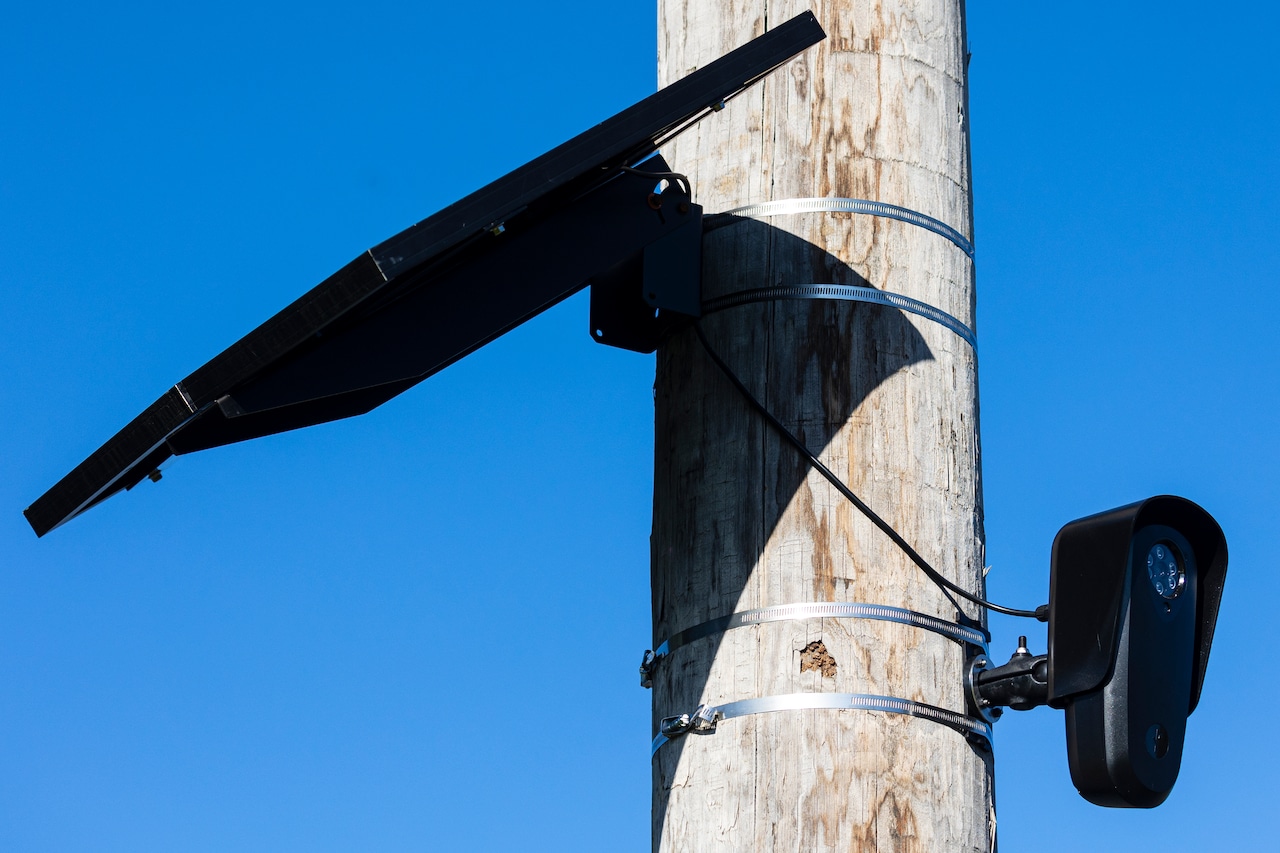
Syracuse, N.Y. ― Syracuse Common Councilors are giving the city’s police department some time to find a new vendor for license plate readers before voting to remove the equipment currently installed due to privacy concerns.
Syracuse Common Councilors Jimmy Monto and Corey Williams agreed Monday to delay the vote on their proposal to revoke permission private company Flock Safety has to operate a camera network on city poles for the Syracuse Police Department.
However, the council did unanimously approve revoking permission for Flock to install two new cameras in the city right-of-way for Syracuse University, which recently launched a Flock network on its campus. The SU cameras on city property have not been installed, so the revocation does not affect the school’s existing camera network, SPD Deputy Chief Mark Rusin told councilors Monday.
Under a contract with SPD finalized in 2023, Flock was to install 26 license plate readers, but only 13 have actually gone online.
Critics of the cameras have long expressed concerns that the data could be used to track people in ways that could infringe upon their civil rights. In the past year, Flock has come under fire as U.S. Border Patrol and other Department of Homeland Safety agencies have tapped into license plate reader data for immigration enforcement.
“Flock is not a public safety partner, it is a private, for-profit surveillance company that built a nationwide vehicle tracking network, and now we as a city have to figure out how to deal with the civil rights fallout,” Monto said during Monday’s meeting.
Afterward, Monto told reporters that SPD has agreed to find a new license plate reader vendor that will provide more ironclad protections of the city’s data. He did not say how long he’ll hold the proposal while police line up a new camera provider, but said he ultimately wants Flock’s relationship with the city to end “quickly.”
Several municipalities have terminated contracts with Flock over data-sharing concerns in the past year. Flock said its customers own and control the data collected, and said it does not have any current contracts with Department of Homeland Security agencies.
Syracuse police earlier this year learned that SPD data had been available for at least a year in a national database accessible to immigration officials, Syracuse police spokesperson Kieran Coffey previously told Syracuse.com. SPD has since taken steps to opt out of data sharing.