
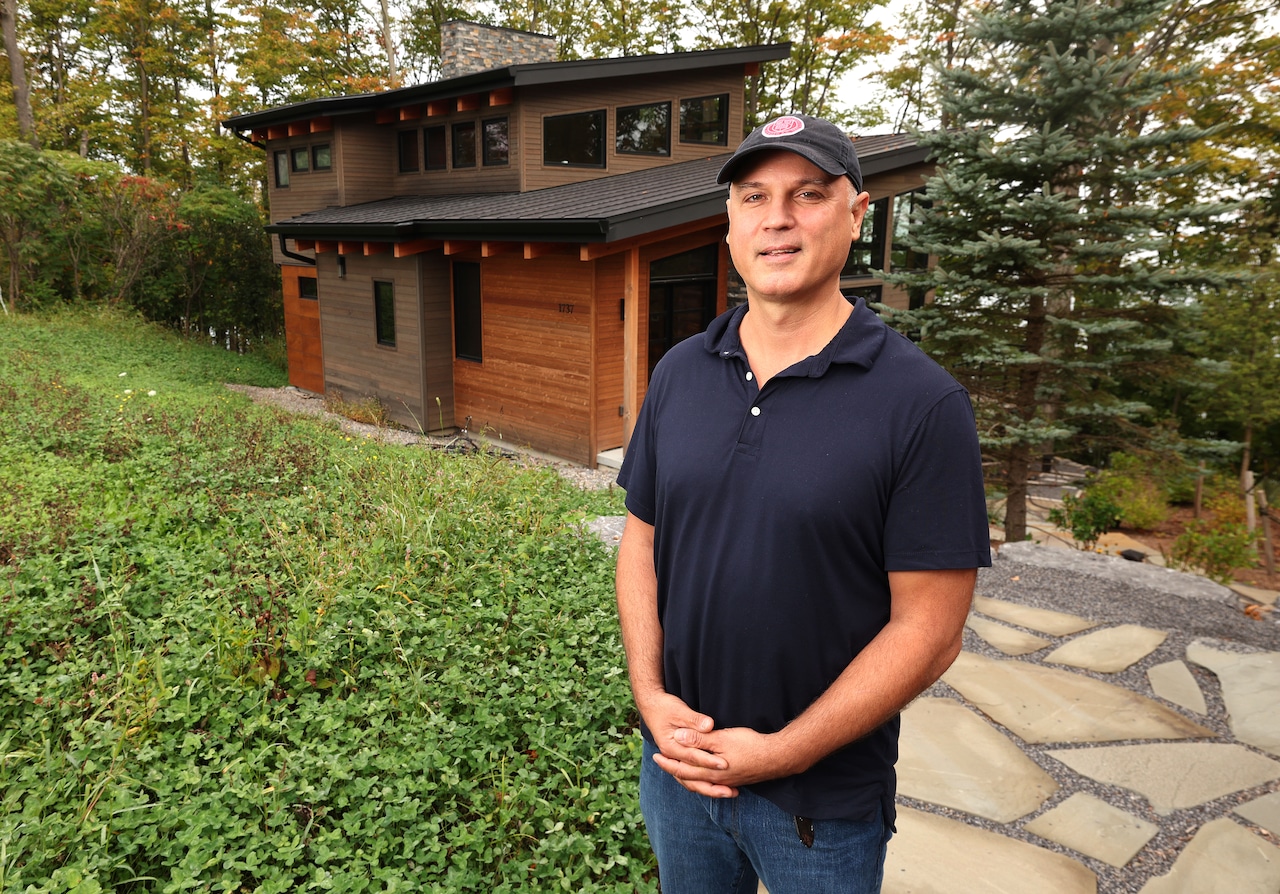
Syracuse, N.Y. – Home builder Dan Barnaba will start construction soon on a new housing development in the town of Salina where none of the homes will be connected to natural gas. No gas furnaces. No gas stoves. No gas fireplace inserts.
All 38 homes at his Glen View development will have electric heat and electric appliances.
Barnaba is getting a head start on a new way of building homes that soon everyone will have to follow. As of Jan. 1, all new buildings of seven stories or less will be prohibited from installing equipment that burns fossil fuels.
There are limited exceptions, including commercial or industrial buildings larger than 100,000 square feet. But the all-electric buildings mandate will have a sweeping impact on housing and most other construction.
New York is the first state to impose a statewide ban on fossil fuel equipment in new construction. The aim is to cut down on greenhouse gases, in keeping with emission reductions called for in the 2019 Climate Leadership and Community Protection Act. Buildings account for nearly one-third of the state’s greenhouse gases.
The all-electric rule is a whiplash turn for the home building industry in New York. For decades, builders have favored natural gas heat over alternatives like oil, propane and electric baseboard. Seven out of 10 homes in Onondaga County heat with natural gas.
The change means that most new buildings will be heated and cooled with air source heat pumps, a technology that is new to many builders and homebuyers in Central New York.
Although heat pumps have emerged as a leading choice in much of the country, especially the South, they have been slow to catch on in colder regions. Now begins a vast experiment to see how New York homebuyers respond.
An air source heat pump moves heat, rather than generating it. Using a refrigerant that is colder than the outdoor air, it draws in heat during the winter even from the coldest air. During summer, the process reverses, collecting heat from indoors and moving it out.
The units are impressively efficient, producing up to three units of heat for every unit of electricity consumed. Even the most efficient gas furnace produces slightly less than one unit of heat for every unit consumed.
Still, some builders are worried that heat pumps could cost more to install and operate than traditional heating and cooling systems. That could drive up new home prices at a time when they are already out of reach for many.
Cost comparisons are tricky. There are subsidies that lower the cost of heat pumps. And some experts insist that homes will be cheaper to build with heat pumps because there is no need for gas infrastructure. Builders are still learning.
Barnaba thinks he will have no trouble selling his all-electric houses in Salina. But this is new territory, he says.
“We have to learn,” Barnaba said. “I have to learn as I go.”
‘I’ve had no call’
Manlius-based home builder Robert DeForest, president of Cordelle Development, said he doesn’t believe consumers want all-electric homes. He is concerned that buyers will shy away, depressing the housing market at a time when the region desperately needs more homes.
“I’ve had no call for an all-electric house. At all. Ever,” he said.
But some builders have had requests. Jeremy Doran of Stone Hammer Homes said many of the 10 or so homes he builds each year are in rural areas off the natural gas system. Choosing between propane heat and electric, some customers have gone electric, he said.
The more expensive electric option is a ground-source heat pump, which requires drilling underground and can add about $40,000 to the cost of a home, Doran said. They are are quieter, more efficient, and longer-lived than air source heat pumps, but cost a lot more to install.
The simpler option is an air source heat pump, which sits outside the house like an air conditioner and adds about $10,000 in upfront costs, he said.
Doran thinks the transition to all-electric homes will be smooth.
“Now we don’t have to pay to run a gas line to houses, or to run gas lines in houses, so there’s going to be some reductions in costs that are going to help balance out that additional cost,” he said. “Knowing our industry and the things we deal with, we’re going to be able to make this adjustment relatively easily.”
Although heat pumps are still a niche option in the market, agencies that build affordable housing subsidized by the state have been building all-electric homes for several years. Every home constructed by Home HeadQuarters in recent years has a heat pump.
Housing Visions recently completed Creekside Landing in Syracuse, a collection of 16 duplexes and a 20-unit apartment building, all with air source heat pumps. Ben Lockwood, CEO of Housing Visions, said he doubts that residents notice any difference from gas heat.
Developer Ryan Benz said the significant subsidies available to buy heat pumps bring the installation cost level with – or even cheaper than – installing furnaces and air conditioners.
Benz went all-electric when he renovated the former St. Matthew’s School in East Syracuse into 21 condos. He’s planning to do the same when he converts a former factory on West Fayette Street in Syracuse into apartments.
For some, higher heating bills
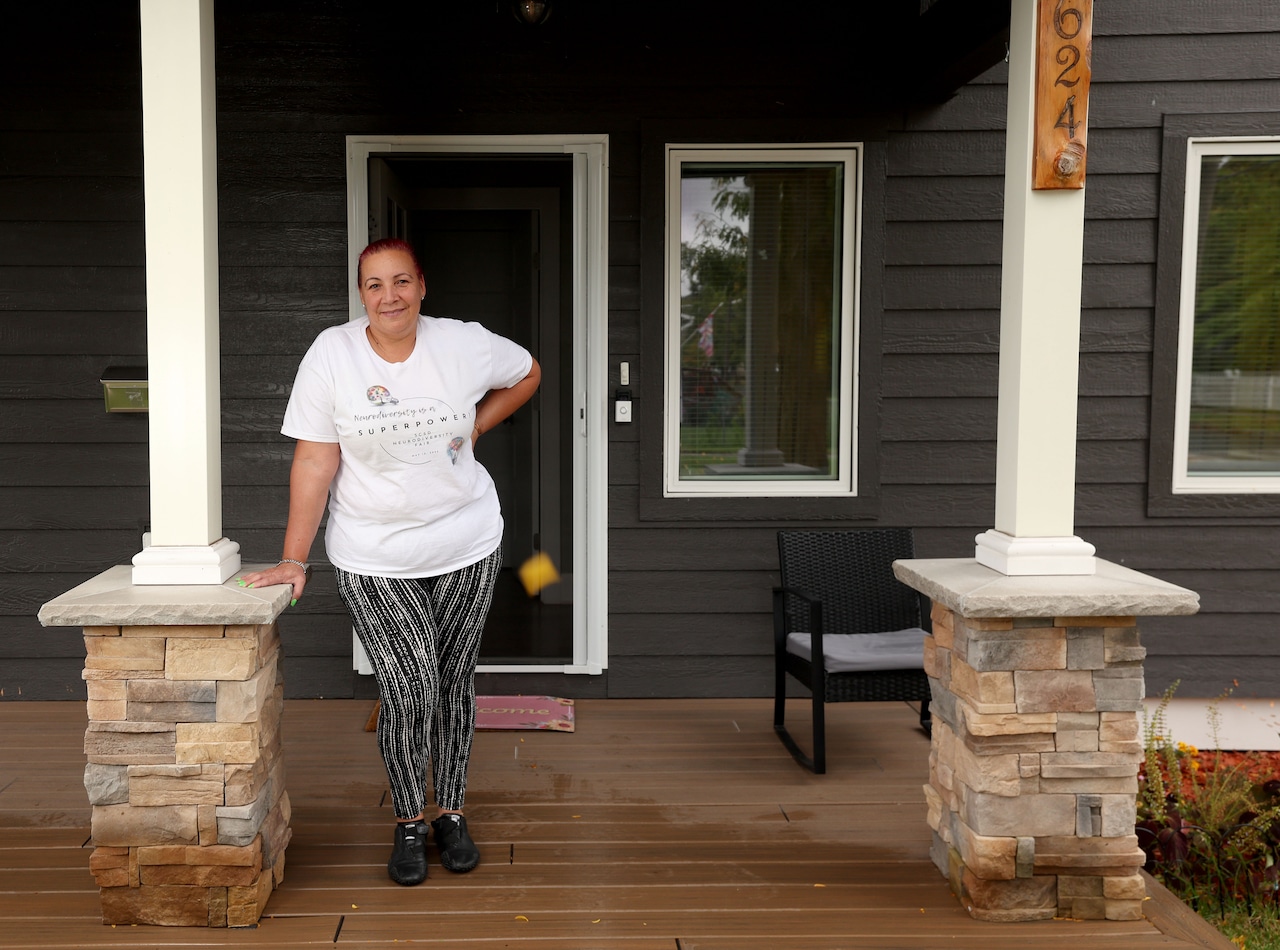
Ivonne Fernandez, who lives on the Near West Side, said her monthly National Grid bill rarely exceeds $30, even in winter. Fernandez bought a new house with a heat pump in 2023 from Home HeadQuarters, a nonprofit housing group.
But in addition to all-electric appliances, her home is super-insulated and outfitted with rooftop solar panels. That level of built-in efficiency sharply reduces the need for energy from the utility, even on the hottest or coldest days.
“I can put the A/C on for maybe two hours, shut it down, and the house is still cold,” she said.
Not every homeowner is so lucky. Home HeadQuarters uses state and federal funding to build top-quality homes that it can sell to low-income buyers at below cost. Builders who put up all-electric houses without such subsidies probably won’t go to the same lengths to insulate and tighten the building.
And thanks to recent federal legislation, significant financial incentives to install solar panels will soon disappear.
Depending on the future price of natural gas, some Central New York homeowners could pay more to heat their new homes with a heat pump than they would have with a highly efficient gas furnace, said Dan Robb, director of evaluation and validation at consulting firm Frontier Energy. The extra cost could be as much as 10% to 40%, he said.
It’s difficult to generalize cost comparisons, Robb said, because they depend on a variety of factors including the efficiency rating of the equipment, the layout of the home heating system and the price gap between electricity and gas.
Here’s how the NYSERDA website puts it: “Heat pumps … can offer significant energy cost savings -- especially if your new home site doesn’t have access to natural gas.”
Compared with other heating fuels like oil or propane, heat pumps are more likely to save money, experts say. But natural gas is relatively cheap now in Upstate New York.
One therm of natural gas from National Grid typically costs a residential customer four to seven times as much as a kilowatt-hour of electricity, but it contains 29 times as much energy. Even though a heat pump can be up to three times as efficient as a furnace, the heat pump could be more expensive to run.
If New York continues on its path to eliminate fossil fuels, the advantages of owning a heat pump will grow, Robb said.
There are a number of ways officials could put their thumbs on the scale. For example, environmental advocates for years have pressed utility regulators to do away with the “100-foot rule,” under which utilities provide new gas hook-ups at no cost to the individual customer. That change would increase the cost of gas service.
In Massachusetts, regulators have approved lower winter electric rates for customers who install heat pumps. The discounts are expected to save customers an average of $540 a year, according to the Department of Public Utilities.
Heat pumps that can handle the extreme cold of Upstate winters have progressed a long way in recent years and are easily up to the task, experts say. But New York is still a “niche market” because relatively few customers have them, said Syracuse University Professor Ian Shapiro, an expert on heat pumps.
As demand for the equipment increases, prices should fall, Shapiro said. Technological advances also will make the equipment more efficient over time, he said.
“Heat pump equipment efficiency has a long way to go before it hits its peak, whereas gas (and) oil have already hit their peak,” he said.
Shapiro, associate director of building science and community programs at SU’s Center of Excellence, has worked on heat pump technology since the 1980s, when he designed equipment for Carrier Corp. He holds nine patents.
Since a heat pump provides both heat and cooling, it replaces the need for a furnace and air conditioner. Several local builders say heat pumps cost about $10,000 more than a furnace and A/C unit, but subsidies are available to reduce that difference.
The average subsidy is about $3,400 for an air source heat pump, depending on the size, according to National Grid.
As builders grow more accustomed, heat pump installations should become cheaper than traditional heating and cooling systems, Shapiro said. There is less equipment to install and no need to bring in gas pipes.
“I will guarantee -- I’ll put money on it -- that a heat pump-heated home is a lower construction cost than a furnace with an air conditioner. Guaranteed, absolutely guaranteed,” Shapiro said.
DeForest, the Manlius builder, doesn’t buy it.
“We’re all still trying to figure it out,” he said. “There’s no question it’s going to be more money to do.”
Fighting the mandate
A coalition of opponents to the all-electric mandate -- including the state and national builders associations, gas equipment dealers, plumbers and utility workers -- is pleading in federal court for a temporary injunction to block implementation of the rule.
They are suing in federal appeals court to overturn New York’s All-Electric Buildings Act of 2023 and the related new housing code prohibiting fossil fuel appliances. They have asked for an injunction while their appeal is heard. The request is pending.
DeForest is among the home builders seeking the stay.
One thing that will drive costs for him and other builders, at least in the short term, is the likelihood that they will lose thousands of dollars in deposits to National Grid for gas service. Traditionally, builders have put up money to have the utility bring gas service to their building lots, which gets refunded as long as they construct homes within five years.
Some builders say they won’t be able to start work on many of those sites before January. DeForest said his small company stands to lose more than $77,000 in utility deposits. That will force him to raise lot prices, he said.
“They’re going to keep my money. So that cost goes into that lot now,’’ he said.
Capacity issues
Is the electric grid ready for all-electric homes? Not always.
Josh Stack, a Syracuse-area builder who also trains other builders for the New York State Energy Research and Development Authority, said National Grid had to do extensive work just to bring adequate power to two houses he built near Skaneateles Lake.
“Not only did National Grid come in and replace the pole and the transformer … at the road, they replaced five to six telephone poles that were daisy chained on that fire lane,’’ Stack said.
Other builders have said they have had to delay plans for housing developments because the local utility could not supply adequate power.
Gerber Homes and Additions, a major Rochester-area builder based in Wayne County, has been forced to delay or abandon eight development projects because of a lack of power capacity on Rochester Gas & Electric’s system, owner John Graziose said in a federal court filing.
The state Public Service Commission is currently weighing whether to grant exemptions for construction projects that are delayed by a lack of capacity on the electric system. The PSC staff has proposed that any project delayed by 18 months or more be exempted from the all-electric rule. The commission has not yet decided.
National Grid officials have urged the PSC to grant additional exemptions to any builders who have already provided deposits for gas infrastructure to allow them to install gas equipment. Otherwise, the utility is required to keep the deposits to avoid having utility ratepayers pay the cost, said Jared Paventi, a National Grid spokesman.
Exempting projects where builders had already provided deposits is necessary “to avoid financial strain on developers and further impact on the state’s housing crisis,’’ Paventi said. Thus far, the PSC has not acted on the proposal.
‘Less and less carbon’
It doesn’t do much to eliminate greenhouse gases if the electricity you use to heat your home comes from power plants that burn natural gas or oil. In Downstate New York, 95% of the electricity comes from power plants that burn fossil fuels.
Upstate, on the other hand, has one of the cleanest power grids in the country. Most of Upstate’s electricity comes from nuclear plants and hydroelectric dams. Some 89% of all electricity generated in 2024 was zero-emission, according to the New York Independent System Operator.
To Shapiro, the SU professor, that means electric heating has a more pronounced benefit in this region. “Your house is effectively emitting less and less carbon as the grid gets cleaner,’’ he said.
The all-electric home is one small piece of a massive transformation planned for New York’s energy system, said Robb, the consultant. He likened it to the Manhattan Project, “only bigger.”
The state plans to build vast amounts of new zero-emission generating capacity. It also needs to beef up the transmission system. Batteries or other facilities will be required to store electricity and dispatch it on demand. Eventually, all the fossil fuels used in building systems will be replaced with electricity.
“This is what everyone’s banking on,’’ he said. “We get all that done, and we have low-cost, zero-emission electricity abundance, and then this all makes sense.’’
NY energy transition
- Fire chief raises concerns about yard-sized battery storage system proposed in Syracuse
- Army selects Fort Drum as possible site for new nuclear plant
- NY puts off implementing law that would ban natural gas in new homes and buildings
- Protesters in Syracuse call on Hochul to drop push for more nuclear power in NY
- NY officials meet in Syracuse to discuss creating an ‘ecosystem’ to support nuclear power
Staff writer Tim Knauss can be reached at: email|Twitter| 315-470-3023.